The Living Room Floor on Christmas Eve
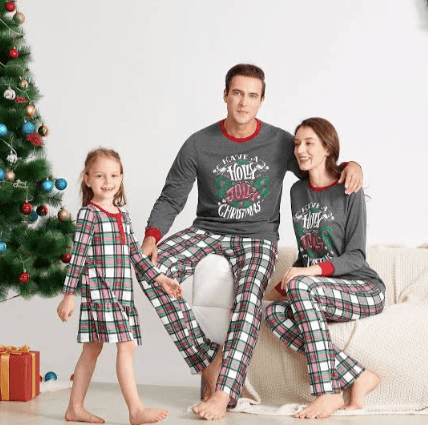
Picture a living room lit only by a tree and a few scattered string lights, boxes half wrapped on the coffee table, and someone’s phone propped against a candle to catch the moment before everyone collapses into bed. There’s wrapping paper tape stuck to the carpet, a mug of cocoa going lukewarm, and four or five people standing in a loose line wearing matching sets that don’t quite fit anyone the same way. Nobody really planned this scene so much as fell into it, the way families do every December without ever discussing it out loud.
That image, matching sleepwear and a slightly chaotic living room, has become shorthand for the holidays in a way few other traditions have. It didn’t arrive through marketing campaigns or influencer strategy sessions, though those certainly helped spread it. It grew out of something simpler: parents wanting one photo a year where everyone looks like they belong to the same unit, even if that unit is loud, mismatched, and running on four hours of sleep.
What Decades of Family Photos Reveal About the Trend
Flip through any family’s photo archive going back thirty years and a pattern emerges well before anyone called it a tradition. The earliest versions were plain red or green cotton sets, often homemade or bought from a single department store aisle with limited sizing. Over time the designs multiplied, the fabrics changed, and the expectation shifted from “we all have something red on” to “we all have the same print, coordinated across every age and body type in the house.”
What the evidence from decades of family photography really shows is that comfort, not aesthetics, is what keeps people buying into the ritual year after year. Parents will admit, if asked directly, that the cute photo is a bonus; the real reason they keep doing it is that everyone is more relaxed, more likely to stay up late, more likely to actually enjoy the evening when nobody is fighting with uncomfortable clothing. Scratchy fabric or restrictive sleepwear quietly killed a lot of early attempts at this tradition, and families noticed, even if they couldn’t always name why the night felt tense.
There’s also a generational layer worth noting. Grown children who grew up in matching sets now buy them for their own kids, partly out of nostalgia and partly because the logistics are easier than they used to be. Retailers caught on to this cycle years ago, which is part of why the holiday sleepwear category has grown steadily instead of fading as a passing fad.
See also:The 10 Best AI Video Face Swap Tools of 2026
Choosing Pieces That Actually Get Worn Past New Year’s
Once a family decides to commit to the tradition, the real test is whether the sleepwear gets worn beyond one photo session. Fabric choice tends to be the deciding factor more than pattern or color, since kids and adults alike will reach for soft, breathable sets on cold nights long after the tree comes down. Families who’ve tried a few different brands over the years often say the ones that stayed in regular rotation were the ones nobody complained about putting on, which sounds like a low bar until you’ve lived through a toddler refusing to wear itchy flannel.
This is where a brand like Minky has carved out a niche, offering holiday pajamas designed around that exact concern, softness that holds up through repeated washing without losing shape or warmth. Buying for the whole household means balancing sizes, patterns, and fabric weight all at once, and it helps when one line covers toddlers, teenagers, and adults without forcing a compromise on comfort.
Sizing is where most families get tripped up, since kids grow fast and what fit last December might be snug the following one. Ordering a size up for younger children, or picking fabrics with a little stretch, saves a last-minute scramble in early December when everyone realizes last year’s matching set no longer zips. Keeping an eye on wash care instructions matters too, since softness is usually the first thing to go if sets are dried on high heat repeatedly.
The families who keep this tradition going longest treat it less like a one-time purchase and more like a small annual ritual worth some planning. They order early, pick fabrics built to survive sleepovers and lazy mornings, and let the kids have some say in the pattern each year. None of that requires much effort, but treating holiday sleepwear as something that earns its place in the drawer the other eleven months, not just the one night everyone poses for a photo, tends to be what separates traditions that stick from ones that quietly fade after a year or two.

 By