The truck pulls up, the crew starts carrying boxes, and within an hour a straight line of trampled grass runs from your front door to the street. Nobody meant to do it. The shortest route just happened to cross the lawn.
Here is how to protect your yard on moving day: walk the moving route the day before, flag sprinkler heads and other low hazards, move planters and ornaments out of the way, lay plywood over soft or wet grass, and decide in advance where the truck will park. Each step takes a few minutes. Together they can save you a repair bill and a patchy lawn.
Map the Moving Path Before Anyone Arrives
Walk the route the crew will use, from every door they will carry items through to the spot where the truck will sit. People take the shortest line, so if you do not choose a path, the lawn will choose one for you.
Do this the evening before. Stand at the front door and look toward the truck. Then stand at the garage or back door and do the same. Any corner of grass that sits between you and the vehicle is a likely shortcut.
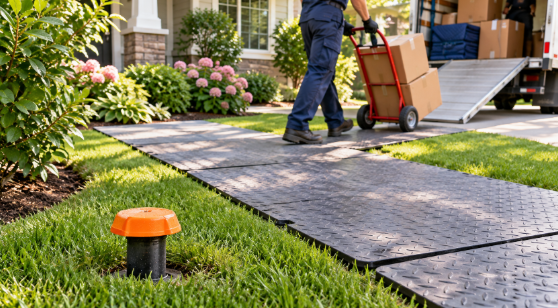
Aim for a hard surface for as much of the trip as possible. Driveways, sidewalks, and stepping stones hold up to dollies and heavy boxes far better than turf does. Where the hard surface runs out, mark a clear corridor roughly four feet wide, which is a comfortable fit for two people carrying a couch or one person pushing a loaded hand truck. Stakes with ribbon, cones, or a line of bricks all work. Just keep the markers visible, because a crew carrying a mattress cannot see small things at ground level.
Flag Sprinkler Heads and Irrigation Lines
Sprinkler heads sit at ground level, so a wheel or a heavy step can crack them. A pop-up head that looks fine on moving day may not pop up at all the next time the system runs.
Broken heads matter more than they seem. The EPA’s WaterSense program notes that a broken or missing head can waste as much as 25,000 gallons of water over a six-month irrigation season. The agency also suggests placing a flag beside any broken head so you can find it later. The same trick works in reverse: flag every head near the moving path before the day begins.
A few practical points:
- Use thin flags, not deep stakes
Irrigation pipe often runs close to the surface, and a long stake pushed in the wrong spot can puncture it. Press a small flag in at the very edge of the head, or use a cone or brick set beside it.
- Turn the system off
Switch your controller to “off” the day before, and leave it off through the move. Wet soil is easier to damage, and nobody wants a surprise spray across a stack of boxes.
- Keep wheels off the heads
Feet are one thing. A loaded dolly or a vehicle tire puts far more pressure on a plastic head and the pipe beneath it.
If you do not know where your heads are, run each zone for a minute or two a few days ahead and mark them as they pop up. It is far easier than hunting for them with a truck idling at the curb.
Move Planters, Ornaments, and Low Landscaping
Anything breakable or heavy near the path should move out of the way before the crew arrives. Moving crews carry large, awkward loads and they often cannot see what is at knee height.
Walk the corridor you marked and check for the usual suspects:
- Potted plants, bird baths, and garden statues
- Solar path lights and yard signs with thin ground stakes
- String lights, hoses, and drip lines that cross the route
- Low shrubs, young trees, and branches that hang into the path
Relocate small items to the back of the yard or the garage. For a heavy pot you cannot lift, a bright ribbon or a visible cone beside it works just as well. Loosely tie back low branches or thorny stems with soft garden ties so they do not snag a sofa or scratch a person.
Lay Plywood Over Wet or Soft Grass
If the ground is wet, cover the path with plywood, particleboard, or heavy cardboard. A solid layer spreads the weight and keeps shoes and wheels from tearing up the turf.
Wet soil is the real problem. Clemson University’s Home and Garden Information Center explains that soil compaction starts when the top four to six inches of soil are pressed together, that foot and vehicle traffic are leading causes, and that wet conditions make it worse when traffic patterns are not adjusted. A University of California extension publication on turf traffic and compaction adds that traffic on wet soil can also scuff and tear plant parts in the soft ground, and advises minimizing traffic when soil is wet.
Many North Texas yards sit on clay-heavy soil, which holds water for a long time after rain. If it rained within the last day or two, assume the ground is soft even if the surface looks dry. A simple test: press a finger into the lawn near the path. If it leaves a clear dent or the soil feels slick, cover it.
Some tips for using boards:
- Choose sturdy sheets. Half-inch plywood or thicker holds up better than thin cardboard, which turns to mush when it gets wet.
- Lay them end to end. Keep the edges tight so no one steps into a gap. Overlap cardboard by a few inches.
- Watch the slope. Wet plywood can be slippery, especially on a slope. On a steep lawn, pick a different route or ask the crew for their advice.
- Pick them up promptly. Boards left on grass for several days block light and can leave yellow stripes. Lift them the same day or the next morning.
Protect Your Yard on Moving Day by Choosing Where the Truck Parks
The safest place for the truck is on pavement, not on your grass. A loaded moving vehicle weighs far more than a family car, and it can sink into soft soil, rip up turf, and crush sprinkler lines.
Start with the street. If there is space in front of your home, that is usually the best spot. If you use the driveway, think about its condition. Old concrete with cracks, or a driveway made of pavers, may not like the weight. When in doubt, keep the heaviest vehicle on the street and carry items the extra distance.
A few other points to settle in advance:
- Check local parking rules. Your city or HOA may have requirements about street parking or blocking a lane, so confirm before moving day.
- Do not use the neighbor’s lawn. It is easy to pull a corner of the truck onto the next yard. Mark where the wheels should stop.
Walk the Route With the Crew Lead
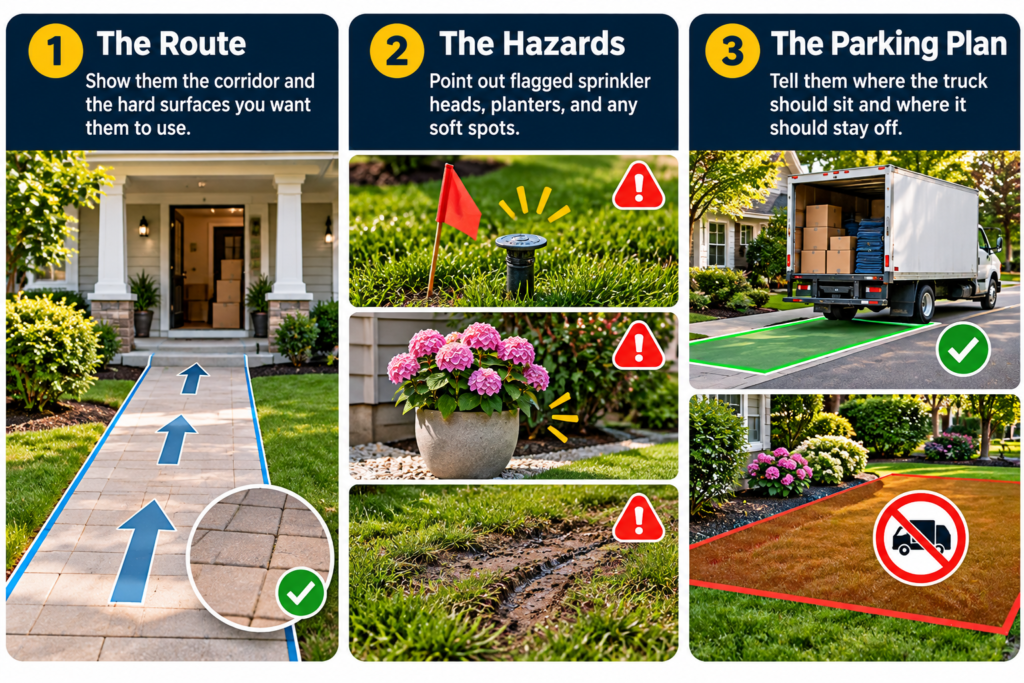
A two-minute walk-through with the crew lead prevents most yard damage. It lets you point out sprinklers, fragile plants, and soft ground, and it lets the crew tell you what they need.
Most professional movers in Celina and DFW are used to hearing about sprinkler heads and fresh sod, so there is no need to feel fussy about it. The same conversation works with friends and family who are helping, and it works best before the first box leaves the house.
Cover three things:
Take a few photos of your yard before you start, too. Clear, dated pictures help if you later need to compare the yard before and after.
Check the Yard After the Move
Walk the yard once the truck leaves, while the details are still fresh. Catching small problems early is much easier than finding a dry patch a month later.
Pick up the flags, boards, and cones, and look for bare spots, ruts, and bent or sunken sprinkler heads. Run each irrigation zone briefly and confirm every head pops up and sprays where it should. The EPA’s WaterSense checklist suggests looking for heads that do not pop up fully or are tilted, since they can spray the wrong areas.
If grass is crushed, give it a few days to recover before judging the damage. Rake gently to lift flattened blades. For bare patches, loosen the surface and reseed or patch with sod.
Compacted spots may need more work. Clemson’s guidance recommends core aeration, which pulls small plugs of soil out of the lawn, as the most effective cure. It also warns against aerating when the soil is wet, so wait for the ground to dry out first.
Frequently Asked Questions
Do I need plywood over the grass on moving day?
Only if the ground is wet or soft, or if the grass is new. Dry, established turf can usually handle a day of foot traffic. When in doubt, test by pressing a finger into the soil near the path. If it leaves a deep dent or feels slick, lay boards over the route.
Should I turn off my sprinklers before the movers arrive?
Yes. Switch the system off the day before and leave it off through the move. This keeps the soil firmer, avoids sprays that soak boxes or workers, and lowers the risk of someone stepping on a pressurized head. Turn it back on only after you have checked every head.
Where should the moving truck park to protect the lawn?
On the street or on a sturdy driveway, never on the grass. A loaded truck is heavy enough to sink into soft soil and crush irrigation lines. If your driveway is cracked or made of pavers, park on the street and carry items a bit farther to protect it.
How do I protect plants and landscaping from movers?
Move small pots, statues, and lights out of the path, and tie back low branches with soft ties. Mark any large pot or young shrub with a bright cone or ribbon so the crew can see it. Walk the route with the crew lead before loading begins.
What if my yard gets damaged anyway?
Take photos right away and check the damage once the soil dries. Rake flattened grass, reseed bare spots, and test each sprinkler zone for broken heads. For deep ruts or packed soil, core aeration helps. If a crew caused the damage, mention it promptly so you can discuss it while the details are fresh.
A Few Minutes Now, a Healthy Lawn Later
Yard damage on moving day rarely comes from one big mistake. It comes from a dozen small ones: a shortcut across soft grass, a sprinkler head nobody noticed, a truck wheel that drifted off the pavement. Every one of those has a simple fix, and most of them take less time than packing a single kitchen drawer.
If you only do three things, mark the route, flag the sprinkler heads, and cover wet ground. Those three steps handle most of the risk. Add a quick walk-through with the crew and a check afterward, and your yard should look the same on the day you leave as it did the day before.


 By