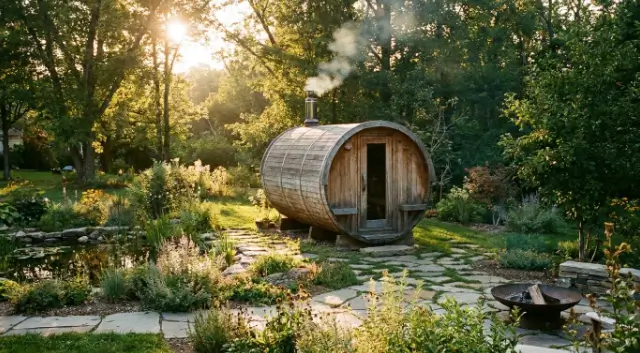
A barrel sauna can run comfortably through a hard winter, but cold climates demand a heater sized 10 to 20 percent above standard charts, a tight door seal, insulated or heat-traced water lines, and a clear path kept shoveled to the door. Skip any of these and a barrel that performed fine in October can struggle to hold temperature, or develop moisture problems, by January. Here is what actually matters for winter use, beyond simply plugging in the heater and hoping for the best.
1. Size the Heater Above the Standard Chart
Heater sizing charts published by most manufacturers assume moderate ambient conditions, and a barrel that sits outside through a genuine cold-climate winter, with temperatures regularly below freezing, loses heat through its curved shell faster than the same barrel would in a mild region. Sizing 10 to 20 percent above the standard cubic-footage recommendation gives the heater enough reserve capacity to reach working temperature in reasonable time and to recover quickly after the door opens and closes, which happens more often in winter as users duck in and out to check on things or grab towels.
2. Check the Door Seal Before the First Freeze
A barrel sauna door relies on a gasket, usually a compressible weatherstrip, to keep heat in and drafts out, and that gasket compresses and wears differently in freezing weather than it does in summer humidity. Inspecting the seal for gaps, hardened rubber, or uneven compression before the first hard freeze of the season catches a problem while it is still a simple gasket swap rather than a heater that runs constantly trying to compensate for a drafty door all winter.
3. Insulate or Drain Any Connected Water Lines
Barrel saunas paired with an outdoor shower or plumbed into a cold plunge setup need their water lines protected before temperatures drop, since standing water in an exposed line can freeze and split a fitting in a single cold night. Heat tape along exposed runs, combined with insulation sleeves, handles lines that need to stay in service through winter. Lines that are not needed until spring should simply be drained and left empty rather than left full and hoping the insulation holds through the coldest stretch of the season.
4. Keep a Cleared, Non-Slip Path to the Door
This sounds obvious until the first real snowfall, but a barrel sauna set even 15 or 20 feet from the house means walking outside in bare feet or sandals after a hot session, and an icy, unshoveled path is a genuine injury risk at exactly the moment someone is warm, a little lightheaded, and not paying close attention to footing. A simple gravel or paver path, kept shoveled and salted through the season, removes that risk entirely and costs far less than the alternative of dealing with a fall.
5. Expect a Longer Warm-Up Time
Cold outdoor air pulls heat out of the barrel’s shell faster than mild-weather air does, which means a heater that reached working temperature in 30 minutes during a September evening might need 45 minutes or more on a January night with the outdoor temperature well below freezing. Planning sessions with that extra warm-up time in mind, rather than expecting the same startup speed year-round, avoids the frustration of stepping into a barrel that has not actually reached target temperature yet.
6. Watch the Roof for Snow Load
A barrel’s curved roof sheds snow reasonably well on its own compared with a flat cabin roof, but heavy, wet snow can still accumulate along the top ridge in a barrel that sits in a shaded, wind-protected corner of a yard. Clearing accumulated snow after a heavy storm, rather than letting it build session after session, keeps unnecessary weight off the roof staves and hoop bands and avoids the slow drip of meltwater running down the sides during warm-up.
7. Compare Cold-Climate-Rated Models Before Buying
Not every barrel sauna on the market is built with the same insulation, gasket quality, or heater headroom for genuine winter use, and a unit priced for a mild-climate buyer can underperform once installed somewhere that regularly sees single-digit temperatures. Shoppers in a cold-winter region can browse the collection of barrel saunas with published heater wattage and stated cold-climate suitability before ordering, rather than discovering the gap in performance after the first snow.
8. Protect the Hoop Bands From Ice and Salt
Steel hoop bands holding a barrel’s curved staves together can corrode faster in winter climates where road salt or de-icing products end up splashed or tracked near the sauna, and standing meltwater that refreezes directly against a band accelerates rust more than dry cold ever would. A quick rinse of the lower bands after any de-icing product use nearby, and keeping the area immediately around the barrel’s base clear of salted slush, extends the life of the bands noticeably compared with letting the winter season run its course untouched. Stainless steel bands sidestep this issue entirely, which is worth factoring in for anyone buying specifically for a harsh winter climate.
What Does the Research Say About Sauna Use in Cold Climates?
The heat-to-cold contrast common in Nordic sauna culture, including the tradition of stepping from a hot sauna into snow or cold water, is part of the broader physiological picture researchers have studied. A paper in American Journal of Physiology examined the effects of both heat and cold exposure on the body, with specific reference to Finnish sauna bathing, describing plausible mechanisms behind reported cardiovascular associations. A 2018 review in Mayo Clinic Proceedings summarized cardiovascular and other health associations found across a range of sauna studies conducted largely in cold-climate countries where the sauna habit is deeply established. These are population-level associations, not proof that any specific cold-weather routine produces a guaranteed benefit for an individual.
Frequently Asked Questions
Can a barrel sauna be used all winter in freezing temperatures? Yes, a properly built barrel sauna is designed for year-round use. A correctly sized heater and a good door seal matter more in winter than in mild seasons.
How much bigger should a heater be for winter use? Many manufacturers recommend sizing 10 to 20 percent above the standard chart for units regularly used in sub-freezing climates.
Do barrel sauna water and drain lines need winterizing? Yes, if plumbed for an outdoor shower or cold plunge. Lines should be drained or heat-traced before hard freezes to prevent cracked fittings.
Is it safe to walk from a hot barrel sauna into snow? Generally well tolerated by healthy adults as part of a hot-cold routine. Anyone with a heart condition or who feels lightheaded should cool down gradually instead.
References
- Effects of heat and cold on health, with special reference to Finnish sauna bathing, American Journal of Physiology, 2018
- Cardiovascular and Other Health Benefits of Sauna Bathing: A Review of the Evidence, Mayo Clinic Proceedings, 2018
- Clinical Effects of Regular Dry Sauna Bathing: A Systematic Review, Evidence-Based Complementary and Alternative Medicine, 2018
By Gary Whitfield